
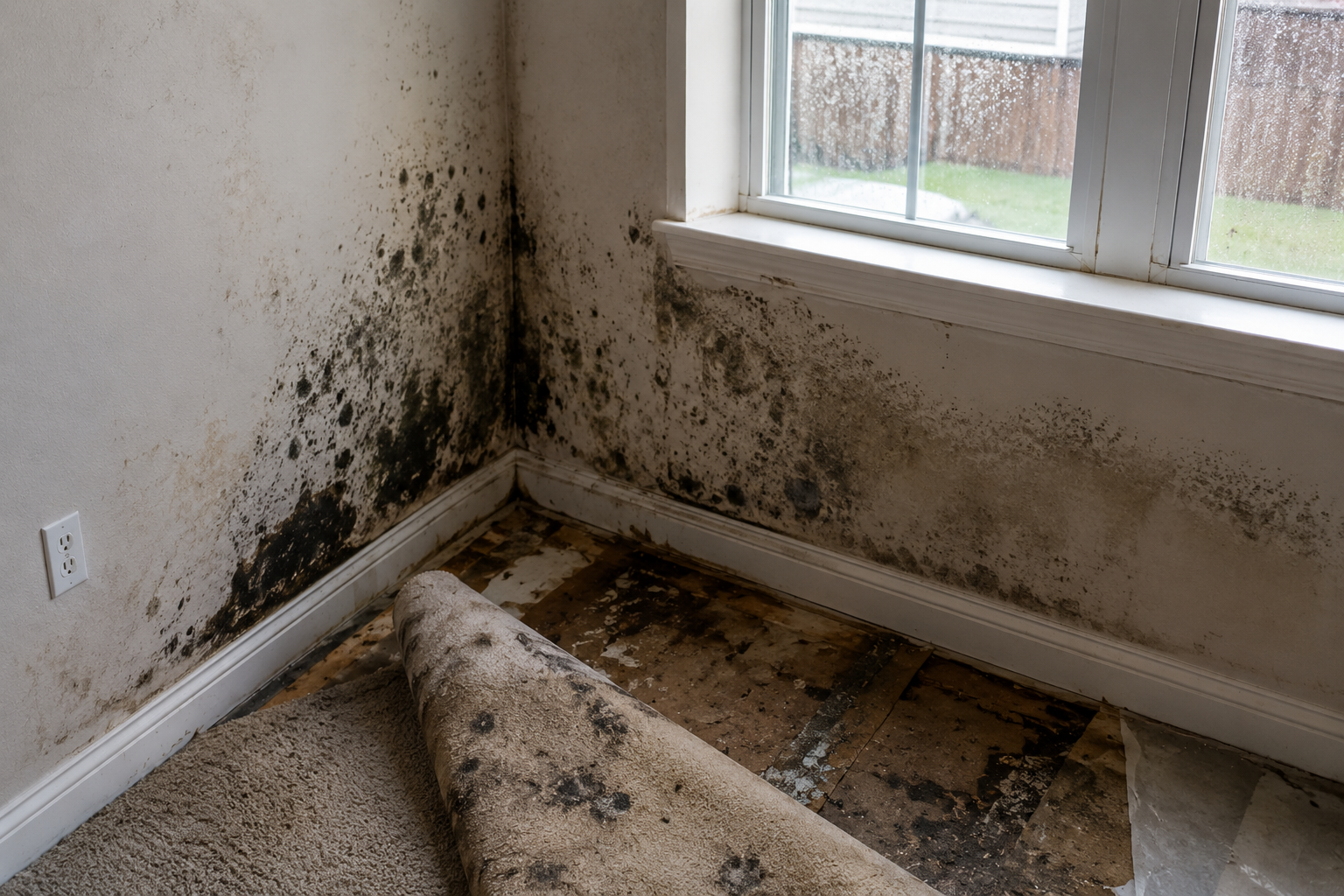
The most reliable signs of mold after water damage are a persistent musty odor that does not clear with ventilation, visible discoloration on walls or ceilings in areas that were wet, and respiratory symptoms in occupants that improve when leaving the home. Mold is often not visible because it grows inside wall cavities, under flooring, and in other concealed spaces before it appears on any surface.
If your home had water damage that was not professionally dried, or that was dried but moisture was left in concealed areas, mold is a realistic concern regardless of whether you can see it.
How Long Does It Take for Mold to Grow After Water Damage?
Mold can begin growing on wet building materials within twenty-four to forty-eight hours under the right conditions. Warm temperatures, high humidity, and organic material, which includes drywall paper, wood framing, and insulation backing, are all the conditions mold needs. In an Indiana home during spring or summer, those conditions exist naturally.
This is why the response timeline after water damage matters so much. Water that is extracted and dried within the first few hours leaves very little window for mold to establish. Water that sits for days while a homeowner decides what to do has already given mold a significant head start.
Homeowners in Fishers and Zionsville who experienced water damage and did not get professional drying within the first twenty-four hours should have a mold assessment done regardless of whether they see any visible growth. Mold assessment and water damage remediation in Fishers uses thermal imaging and moisture meters to find hidden growth before it becomes a larger remediation project.
What Does Mold Smell Like After Water Damage?
Mold has a distinctive musty, earthy odor that many people describe as similar to wet cardboard or old books. It is different from the smell of fresh water damage, which tends to be more neutral. The musty smell indicates active mold growth, not just past moisture.
The smell is often localized. It is stronger near the affected wall, in a closet adjacent to the wet area, or in the basement. If the smell is present in one room but not others, that localization is useful information for identifying where the growth is occurring.
If you can smell mold, the growth is already established. The question is not whether you have mold but where it is and how extensive it is. That requires professional assessment, not a visual inspection.
Where Mold Hides After Water Damage
The locations where mold establishes most often after water damage are the same locations where moisture is hardest to detect and dry. Inside wall cavities behind baseboards. Under bathroom tile on the subfloor. In the floor joist system beneath a wet room. Above suspended ceilings. Inside HVAC ductwork that pulled in moisture during the water event.
Homeowners in Whitestown and Lebanon whose water damage appeared minor on the surface are sometimes the ones who find the most significant mold growth, precisely because the moisture that reached concealed areas was never identified. Structural drying and mold prevention in Whitestown that includes a full moisture mapping assessment finds those concealed pockets before mold has time to establish in them.
Should You Test for Mold After Water Damage?
Air quality testing after water damage is useful in specific situations: when occupants are experiencing health symptoms that may be related to mold exposure, when a remediation has been completed and you want documented confirmation that the problem is resolved, or when a real estate transaction requires it.
Testing is less useful as a first step when visible growth or a strong musty odor is already present. In those cases, the mold is confirmed. The next step is remediation, not testing. Testing what you already know is there delays the work without adding useful information.
For homeowners in Indianapolis and Carmel who want peace of mind after a water loss, post-remediation mold clearance testing in Indianapolis provides documented confirmation that the affected areas have been returned to normal fungal levels. This documentation is also useful if the property is later sold or if an insurance dispute arises about the thoroughness of the remediation.
What to Do If You Suspect Mold
- Do not attempt to clean visible mold with bleach or household cleaners, which address surface growth but not the colony inside the material
- Avoid disturbing suspected mold areas by cutting, sanding, or demolishing without proper containment
- Keep the HVAC system running on normal settings but avoid directing airflow toward the suspected area
- Document any symptoms occupants are experiencing with dates and specific locations in the home
- Call a certified mold remediation company for a professional assessment before taking any action
Professional Mold Assessment vs. DIY Testing Kits
Over-the-counter mold test kits measure airborne spore counts in a given location. They confirm the presence of mold but do not identify where it is growing, what species is present, or how extensive the growth is. The results rarely provide actionable information without professional interpretation.
A professional assessment by IICRC certified mold remediation contractors in Zionsville uses thermal imaging and moisture meters to locate the growth source, identifies what materials are affected and to what depth, and develops a remediation scope that addresses the full problem rather than just the visible surface. That information is what you actually need to make a decision.
Frequently Asked Questions
Q: How do you know if you have mold after water damage?
A: The most reliable indicators are a persistent musty odor, visible discoloration in areas that were wet, and health symptoms in occupants that improve when away from home. Mold often grows in concealed areas before it appears on any surface. Professional moisture mapping and thermal imaging can detect hidden growth before it becomes visible.
Q: How long does it take for mold to grow after water damage?
A: Mold can begin growing within twenty-four to forty-eight hours on wet building materials under warm conditions. This is why professional drying within the first few hours of a water event is so important. Water that sits for a day or more without professional intervention has already provided sufficient conditions for mold to establish.
Q: What does mold smell like after water damage?
A: Mold has a distinctive musty, earthy odor often compared to wet cardboard or damp soil. It is different from the neutral smell of fresh water damage. If you detect a musty smell that is localized to an area that experienced water damage, that is a strong indicator of active mold growth in or near that area.
Q: Should I test for mold after water damage?
A: Professional air quality testing is most useful after remediation has been completed, to confirm the area has returned to normal levels. When visible growth or a strong musty odor is already present, remediation is the next step, not testing. Testing what is already evident delays the work without adding useful information to the decision.
Concerned about mold after water damage in your home? Call Restorm Indy for a professional assessment across Indianapolis, Carmel, Fishers, Avon, Zionsville, Lebanon, and Whitestown.



0 Comments