
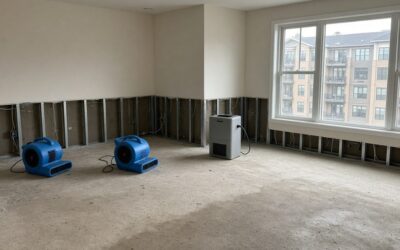
A Property Manager’s Guide to Water Damage in Indianapolis Apartments
For property managers, water damage is one of the most common and most disruptive problems they face. One failed toilet supply line on the third floor can affect the units below it, the hallway, and sometimes the building’s common areas. Residents are upset, owners...

Basement Flooding During Central Indiana Spring Storms
Spring in Central Indiana brings a lot of rain, often in short bursts that drop more water than the ground can absorb. For homeowners in Avon, Whitestown, and the growing neighborhoods around Indianapolis, that’s when basements start taking on water. Whether it’s a...
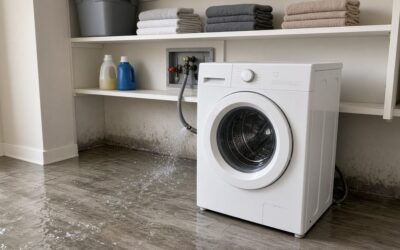
Second-Floor Laundry Room Leaks in Newer Carmel and Fishers Homes
Many newer homes in Carmel and Fishers put the laundry room upstairs near the bedrooms. It’s a smart layout. Nobody misses hauling baskets up and down the stairs. But it also means the washing machine, with its water supply hoses and drain, sits directly over the...
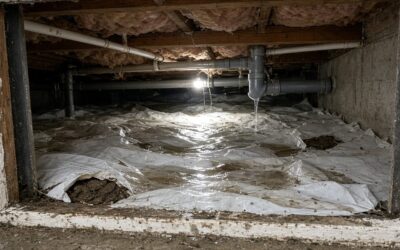
Crawlspace Water After a Plumbing Leak in an Indianapolis Home
Plenty of older homes around Indianapolis sit over a crawlspace instead of a basement. It’s out of sight, usually dark and tight, and most homeowners only go down there when something goes wrong. That’s exactly why a plumbing leak in a crawlspace can run for weeks...

The Ceiling Spots in Your Bathroom Are a Ventilation Report Card
The gray-black speckling that keeps returning to a bathroom ceiling, the pink film in the shower corners, the paint that bubbles above the tub: homeowners treat these as cleaning problems, and they are actually grades, a report card on how much shower moisture the...

After the Fans Leave: How the Rebuild Actually Gets Your House Back
Mitigation gets the drama, sirens, fans, urgency, and reconstruction gets the house back. It is the longer half, the half with permits and cabinets and inspectors, and the half where restoration projects most often stall: the equipment leaves, the walls stand open,...