
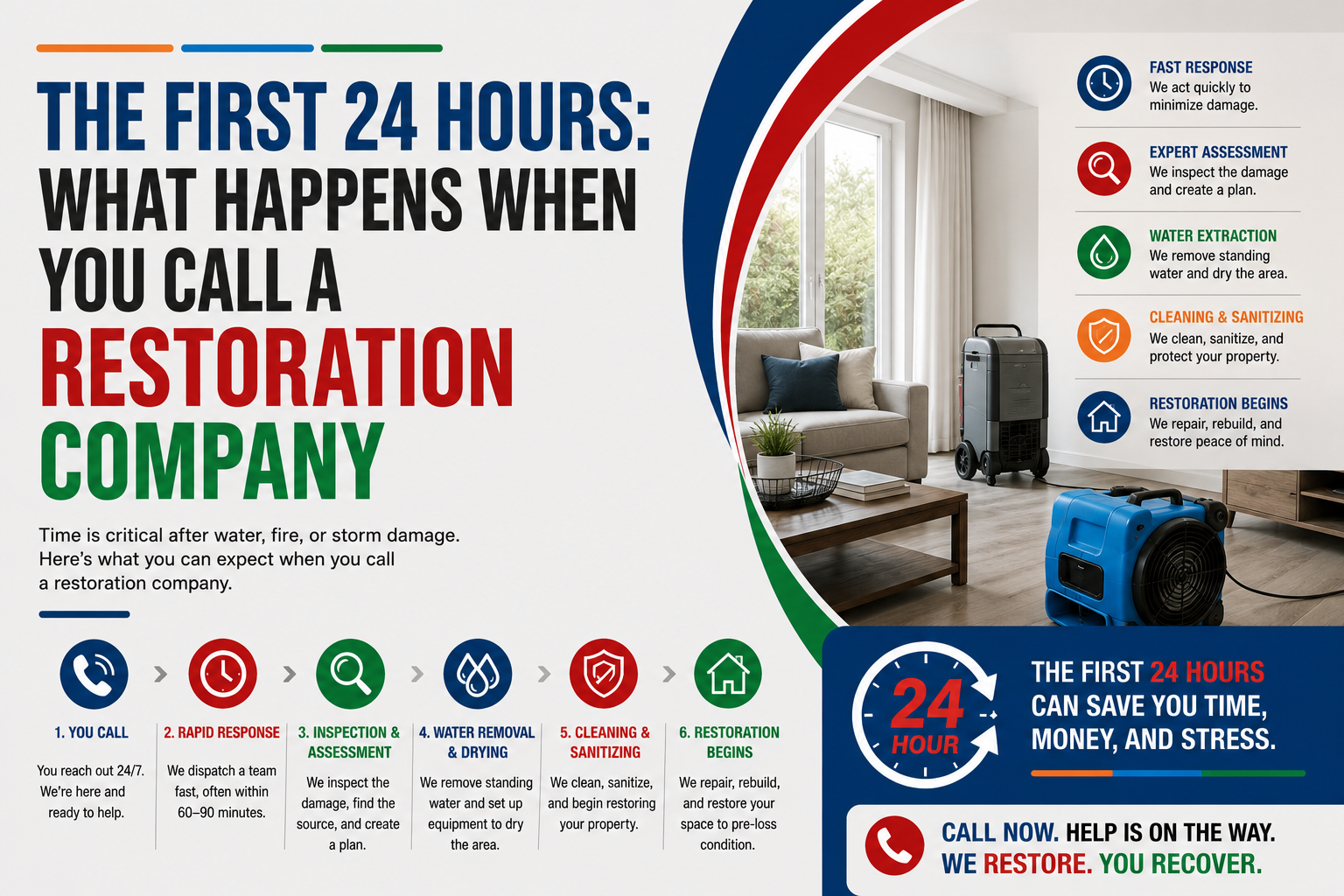
Most people call a restoration company exactly once or twice in their lives, always on a bad day, with no idea what happens after the phone call. The uncertainty adds stress to a moment that has plenty, and it makes owners vulnerable to the wrong operators, the ones who arrive with a contract before a moisture meter. Here is the honest anatomy of a professional first 24 hours, water loss, fire, or sewage, so that if the bad day comes, you know what good looks like and can hold whoever shows up to it.
Hour Zero: The Call Itself
A professional intake is a triage conversation, not a sales pitch: what happened, is it ongoing, is the property safe, water and power status, and who is on site. You should leave the call with three things, safety guidance for right now, shut the main, stay out of standing water near outlets, don’t run the HVAC after a fire, a realistic arrival window measured in hours, and a clear statement that assessment precedes any signed scope. Restorm Indy’s emergency restoration services line runs around the clock on exactly that model, because the first minutes are for stopping the loss, not opening a file.
Hours One to Three: Arrival and Assessment
The crew’s first job is making the situation stop getting worse: source control confirmed, safety hazards flagged, and then the instrumented walkthrough, moisture meters and thermal imaging on a water loss, structural and air-quality judgment on a fire, contamination category called honestly on any sewage or flood event. You should see the readings, hear the category, and get a scope explained in plain language before anything is signed. Photographs happen before work does; that documentation is the foundation of your claim, and a crew that starts demolition before documentation is costing you money.
Hours Three to Twelve: Mitigation in Force
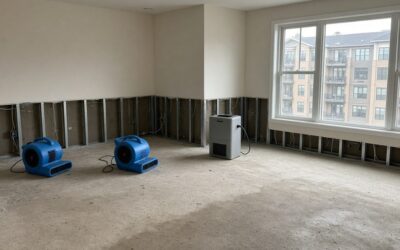
- Water: extraction first and fast, then unsalvageable saturated materials out, then drying equipment placed to a plan, air movers and dehumidification sized to the actual load, not to what fit on the truck
- Fire: board-up and weather protection, contents triage begun, and HVAC locked off before it spreads soot another cycle
- Sewage and flood: containment, protective protocols, contaminated porous materials removed, and disinfection of what remains, never fans blowing across category three water
- Throughout: an equipment and moisture log opens, the record that will prove drying reached standard days from now
The Insurance Track Runs in Parallel
Somewhere in these hours, the claim opens, and a capable restoration company carries the technical side: emergency mitigation is covered and expected under your policy’s duty to protect the property, no adjuster pre-approval required for reasonable first-day work, and the documentation the crew built, photos, readings, scope, is exactly what the adjuster needs. What should not happen on day one: pressure to sign an assignment of benefits, a total-project contract before assessment, or any promise about what insurance will pay from someone who hasn’t met your adjuster.
Hour 24: What You Should Have in Hand
By the end of day one on a professionally handled loss: the source stopped, the property secured, the wet or contaminated scope stabilized and shrinking, an equipment plan running with a monitoring schedule, a documented file already thicker than most claims ever get, and a named person who answers your calls. From there the project runs its arc, daily readings to dry standard, then rebuild, and Restorm Indy carries that arc through reconstruction under the same file, and treats any growth or contamination discovered along the way inside the same project through its mold and biohazard scope. The first 24 hours don’t finish the loss. They decide how it finishes.
Frequently Asked Questions
Q: How fast should a restoration company arrive?
A: For active emergencies, within hours, same day without question, and good companies give you a realistic window on the call plus safety steps for the meantime. Response time matters most on water and sewage losses where every hour spreads the footprint. A company quoting tomorrow for standing water today is the wrong company for today.
Q: Do I need insurance approval before mitigation starts?
A: No, your policy requires you to protect the property from further damage, and reasonable emergency mitigation, extraction, board-up, drying, is covered and expected before an adjuster is ever assigned. What matters is documentation before and during the work, which is the professional crew’s habit anyway. Permanent repairs, by contrast, wait for the agreed scope.
Q: What should I refuse to sign on day one?
A: Assignments of benefits, whole-project contracts presented before assessment, and anything signed under arrive-tonight-or-lose-the-price pressure. Day one legitimately involves a mitigation authorization for the emergency scope, explained and reasonable. The full reconstruction contract belongs after the loss is assessed and the insurance scope is taking shape.
Q: What can I do before the crew arrives?
A: Safety and source: shut the water main on a plumbing loss, keep people away from standing water near anything electrical, and after a fire, don’t run the HVAC. Then photographs of everything as it stands. Skip the wet-vac heroics on sewage or flood water, that water is contaminated, and moving it around barehanded is how a property loss becomes a health story.
Emergency now, or want the number saved before one? Restorm Indy answers 24/7 across Indianapolis, Avon, Zionsville, Whitestown, and the metro. Call now.





0 Comments