
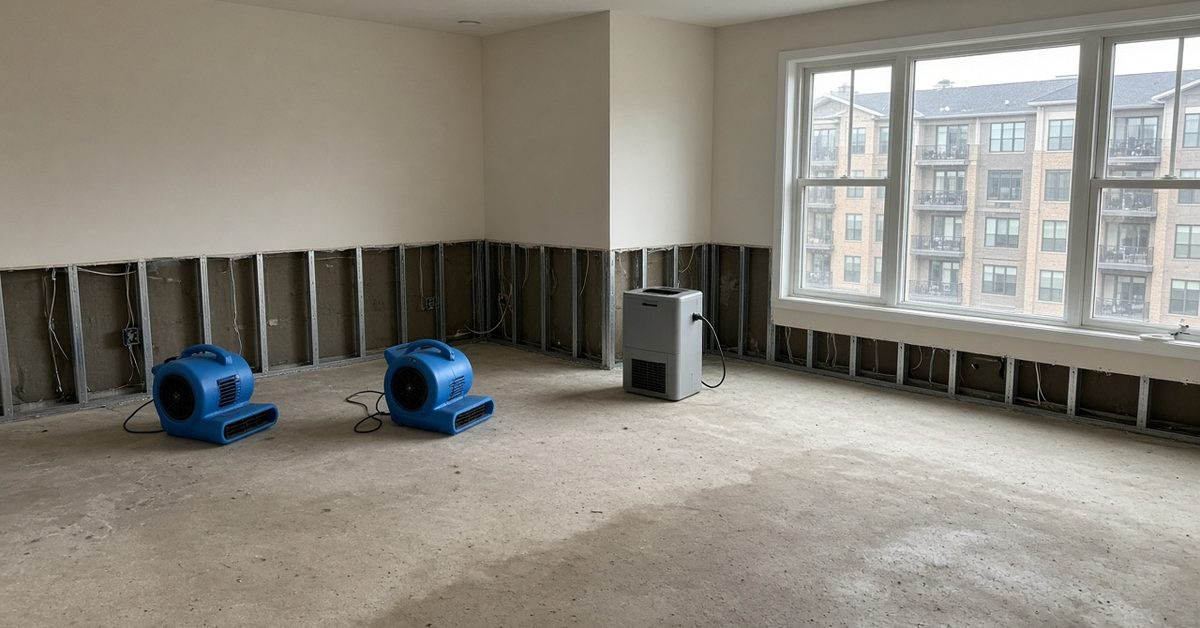
For property managers, water damage is one of the most common and most disruptive problems they face. One failed toilet supply line on the third floor can affect the units below it, the hallway, and sometimes the building’s common areas. Residents are upset, owners want answers, and the clock is running.
Here’s a practical look at how water spreads in multi-family buildings, what to do in the first hour, and how to choose a restoration partner that makes the process easier.
Why One Leak Becomes Several
Apartment buildings usually stack units, so kitchens sit over kitchens and bathrooms over bathrooms. That keeps plumbing efficient, but it also gives water a direct path down through every floor. Water runs through plumbing chases, along floor framing, and into walls shared with neighboring units.
The most common sources we see are toilet supply lines, washing machine hoses, water heaters, HVAC condensate lines, and frozen pipes in exterior walls. Many leaks start overnight or in vacant units, which gives them hours to spread.
The First Hour
- Stop the water. Find the source unit and shut off the fixture or the unit’s supply. If you can’t find it fast, shut off the riser or building main.
- Check every unit in the stack, even the ones that look dry. Water may already be in the ceiling.
- Cut power to any fixtures or outlets near water.
- Notify residents in affected units and let them know what to expect.
- Document unit by unit with photos and notes. This helps sort out responsibility and claims later.
- Call a restoration partner that can handle several units at once.
What Good Restoration Looks Like
Professional water damage restoration in a multi-family building starts with a moisture survey of every unit in the stack and the units beside it. That map shows exactly where water traveled and becomes the basis for the drying plan and the insurance documentation.
Drying is planned to keep residents in their homes whenever it’s safe. That can include containment around work areas, scheduling demolition around resident needs, and drying rooms in phases.
Putting Units Back Together
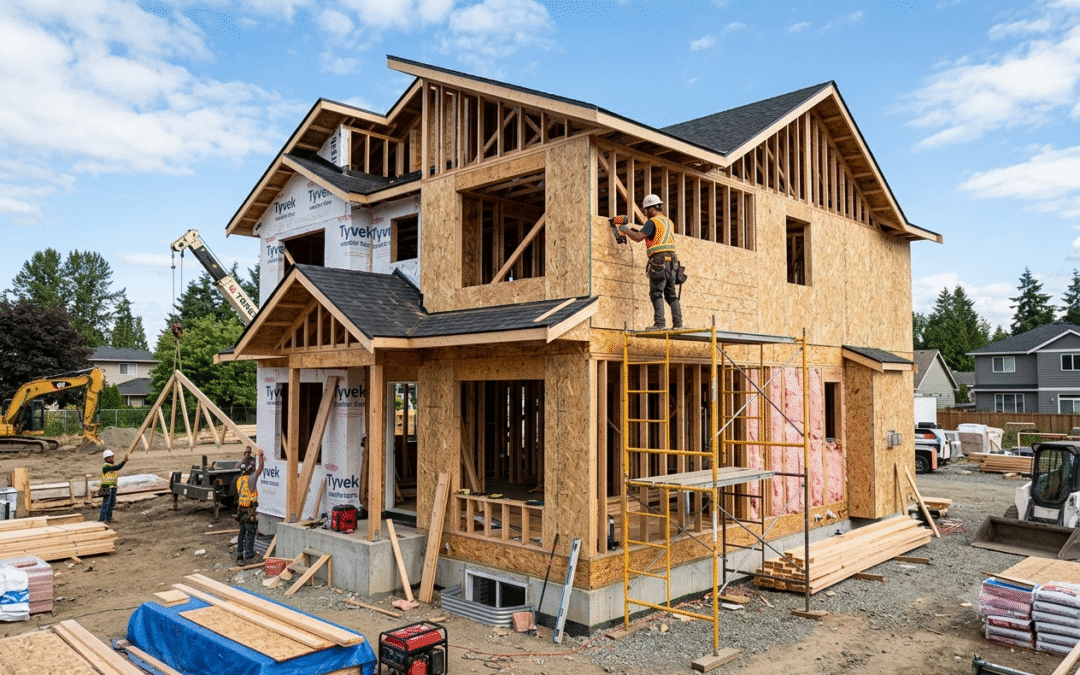
After drying, units need drywall, paint, flooring, cabinets, and trim repaired. Coordinating that across several units with different residents is where many projects drag out. Working with a company that handles both mitigation and reconstruction and structural repair keeps one team accountable, keeps the scope consistent, and gets units back to rent-ready faster.
Choosing a Restoration Partner
Look for a company that:
- Responds 24/7 with a real person on the phone
- Has experience with multi-unit buildings and resident communication
- Documents thoroughly for owners and insurance carriers
- Handles both drying and rebuilding
- Can scale crews and equipment for larger losses
Setting that relationship up before a loss saves time when it matters most. It also means your partner already knows your buildings, shutoff locations, and procedures.
Reducing Future Losses
- Replace aging toilet supply lines and washer hoses during unit turns.
- Add leak sensors near water heaters and washers.
- Label riser shutoffs clearly and train maintenance staff on them.
- Keep heat on in vacant units during winter.
- Schedule regular HVAC condensate line cleaning.
Frequently Asked Questions
Who is responsible for water damage between apartments?
It depends on the cause, the lease, and the insurance policies involved. The owner’s building policy often covers the structure, and residents’ renters insurance covers their personal belongings. If a resident caused the leak, their liability coverage may apply. Good documentation helps everyone sort it out.
How can property managers reduce water damage costs?
Fast response is the biggest factor. Knowing where riser shutoffs are, having a restoration partner on call, and replacing aging supply lines during unit turns all cut down on how far water spreads and how much has to be rebuilt.
Can units stay occupied during drying?
Often, yes. With containment and careful scheduling, many residents stay in their homes while equipment runs. Relocation is more likely if kitchens or bathrooms are unusable or if the water was contaminated.
How long until units are rent-ready again?
Drying usually takes three to five days. Repairs vary by damage, from a few days for drywall and paint to a few weeks when cabinets and flooring need replacing. Working with one company for both drying and rebuilding keeps the timeline tighter.
What should be in a unit-turn water checklist?
Check toilet supply lines and fill valves, washer hoses, the water heater age and pan, under-sink connections, and HVAC condensate lines. Replace anything aging while the unit is empty. It takes a small amount of time during turnover and prevents many of the leaks that turn into multi-unit losses.
Do property managers need a restoration company on contract?
It isn’t required, but it helps. A pre-arranged partner already knows your buildings, pricing expectations, and procedures, so the response is faster and smoother when a leak happens after hours or on a holiday.
Serving Central Indiana Property Managers
We work with apartment communities and property managers across the region, from Indianapolis to Lebanon. For fast response to water damage in your buildings, call Restorm at (317) 995-6696, any time.



0 Comments