
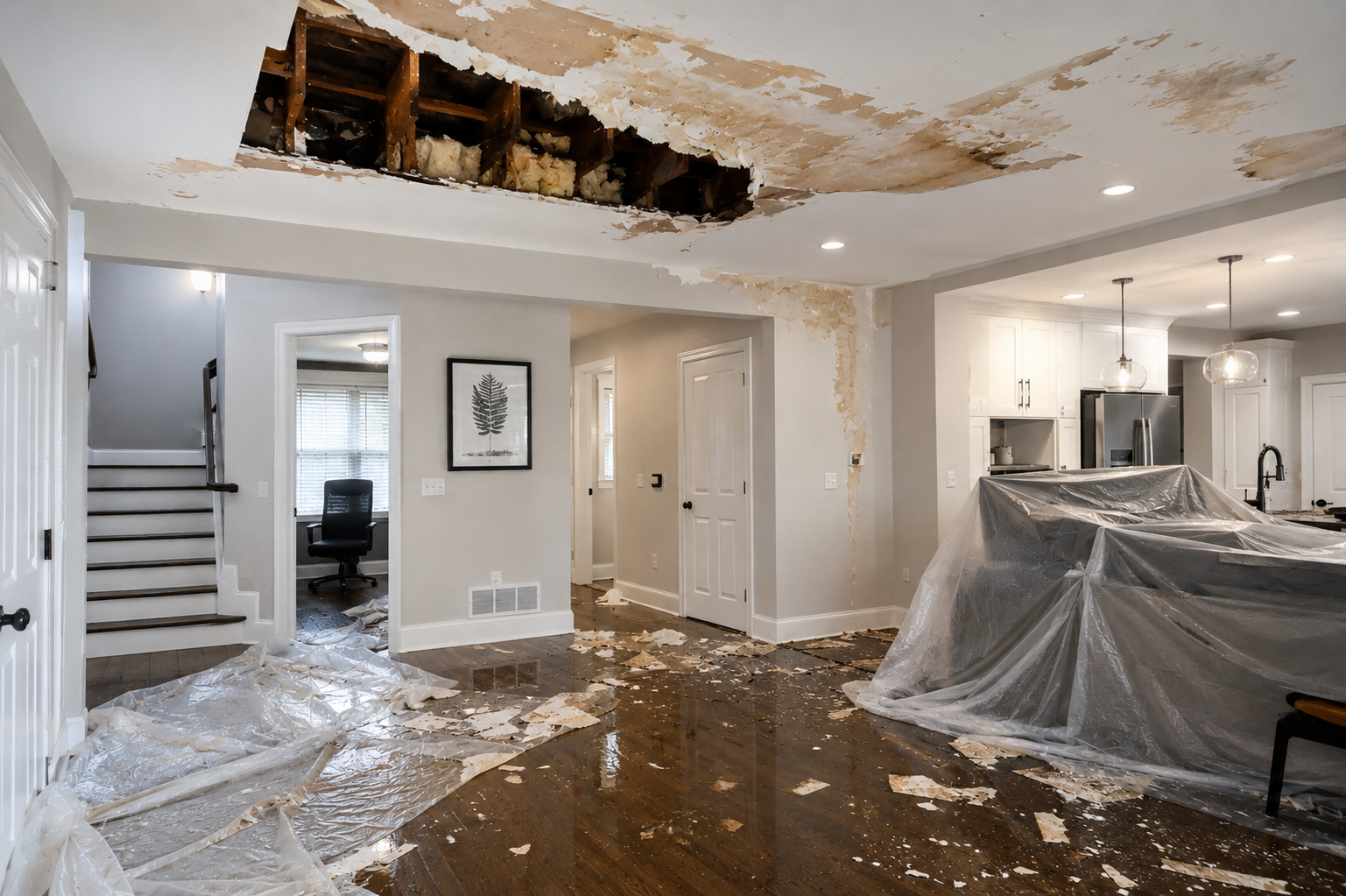
In most cases, yes. If the water damage is contained to one area of the home, does not involve sewage or contaminated water, and the structure is sound, you can stay while the restoration process happens. The drying equipment is loud and the affected areas will be off-limits, but the rest of the home remains livable.
There are situations where staying is not safe. Knowing the difference matters for both your health and your insurance claim.
When It Is Safe to Stay
Clean water losses from a supply line, appliance overflow, or roof leak in a contained area generally allow the homeowner to remain in the home during restoration. The restoration team sets up containment barriers around the work area, runs industrial drying equipment, and monitors moisture daily. The rest of the home stays functional.
The equipment will be running continuously, which means noise and airflow throughout the house. Most homeowners adapt quickly. If the affected area includes a bedroom or bathroom that makes the home functionally difficult to live in, that is worth discussing with your adjuster as a potential additional living expenses situation even if safety is not the issue.
Homeowners in Carmel and Fishers dealing with contained water losses should communicate with the restoration team about what areas are accessible and what the daily monitoring schedule looks like. A water damage restoration team in Carmel that is transparent about the process from day one makes it significantly easier to manage daily life around the restoration work.
When You Need to Leave
Sewage backup or any water loss involving contaminated water requires the affected area to be treated as a biohazard. Category three water, which includes sewage, floodwater, and any water that has been standing long enough to become heavily contaminated, poses a direct health risk. Staying in the home during remediation of a category three loss is not advisable without proper containment and air quality controls.
Structural damage that compromises the safety of the building is the other clear reason to leave. If water has damaged load-bearing elements, flooring that is no longer structurally sound, or has compromised electrical systems in a way that creates hazard, the home is not safe to occupy until those issues are resolved.
Homeowners in Avon and Zionsville dealing with significant water losses that involve sewage backup or structural concerns should have the home assessed by the restoration team before deciding to stay. Emergency water extraction in Avon includes an initial assessment that covers water category, structural safety, and air quality, giving you the information you need to make an informed decision about occupancy.
Does Insurance Pay for a Hotel During Water Damage Restoration?
Most standard homeowner policies include additional living expenses coverage. This covers temporary housing costs when the home is uninhabitable due to a covered loss. The key word is uninhabitable. An adjuster will assess whether the loss actually makes the home unsafe or unlivable, not just inconvenient.
If the loss qualifies, the coverage typically includes hotel costs, meals above your normal food budget, laundry, and other reasonable expenses incurred because you cannot use your home. Keep every receipt from the date of the loss forward. Submit them to your adjuster along with documentation of why the home is not safe to occupy.
Families in Lebanon and Whitestown displaced by a significant water loss are often surprised by how much their policy covers. Ask your adjuster specifically about the daily limit and the total cap on additional living expenses. Water damage insurance claim help in Lebanon from a restoration company experienced in working with adjusters means this coverage line is flagged and documented from the start rather than discovered after the fact.
What Makes a Home Uninhabitable for Insurance Purposes
- Sewage or contaminated water requiring biohazard remediation in living areas
- Loss of essential utilities including heat, water, or electricity
- Structural damage that makes portions of the home unsafe to use
- Air quality issues from mold, smoke, or chemical contamination
- Loss of a primary bathroom or kitchen that makes the home functionally unusable
Protecting Your Health While Staying During Restoration
If you are staying in the home during a clean water restoration, keep children and pets away from the work area and the equipment. Industrial air movers push significant airflow and can disturb dust and debris in the affected area. Run the HVAC system normally in the unaffected portions of the home to maintain comfort.
Monitor yourself and family members for any respiratory symptoms. If anyone develops coughing, eye irritation, or respiratory discomfort that seems related to the restoration work, raise it with the restoration team. They can assess whether air quality in the living areas is being affected.
Restorm Indy works with families across Indianapolis, Fishers, Carmel, Avon, Zionsville, Lebanon, and Whitestown through the full restoration process. IICRC certified water damage restoration in Indianapolis means every step follows a documented protocol that prioritizes both structural outcomes and the health of the people living in the home during the process.
Frequently Asked Questions
Q: Can you stay in your home during water damage restoration?
A: In most cases, yes. Clean water losses in contained areas allow homeowners to remain while industrial drying equipment runs. Losses involving sewage, contaminated water, structural damage, or compromised air quality may require temporary relocation. The restoration team assesses these factors on arrival and advises accordingly.
Q: Is it safe to sleep in a house with water damage?
A: It depends on the type of water and extent of damage. Clean water losses with proper containment are generally safe to sleep through. Losses involving sewage, mold, or compromised structural elements require evacuation. If there is any uncertainty about air quality or structural safety, temporary relocation is the right decision.
Q: Does insurance pay for hotel during water damage restoration?
A: Most standard homeowner policies include additional living expenses coverage that covers hotel costs when a covered loss makes the home uninhabitable. The home must meet the uninhabitable threshold, not just be inconvenient. Keep all receipts and document why the home cannot be safely occupied. File for this coverage when you open the claim.
Q: How long do you have to leave your house after water damage?
A: The duration depends on the severity of the loss and what makes the home uninhabitable. Sewage remediation may require several days of displacement. Structural repairs may require weeks. Your restoration contractor can give you a realistic timeline once the initial assessment is complete.
Water damage in your home? Call Restorm Indy now. We assess the situation on arrival, advise on occupancy, and coordinate your insurance coverage including additional living expenses.



0 Comments