
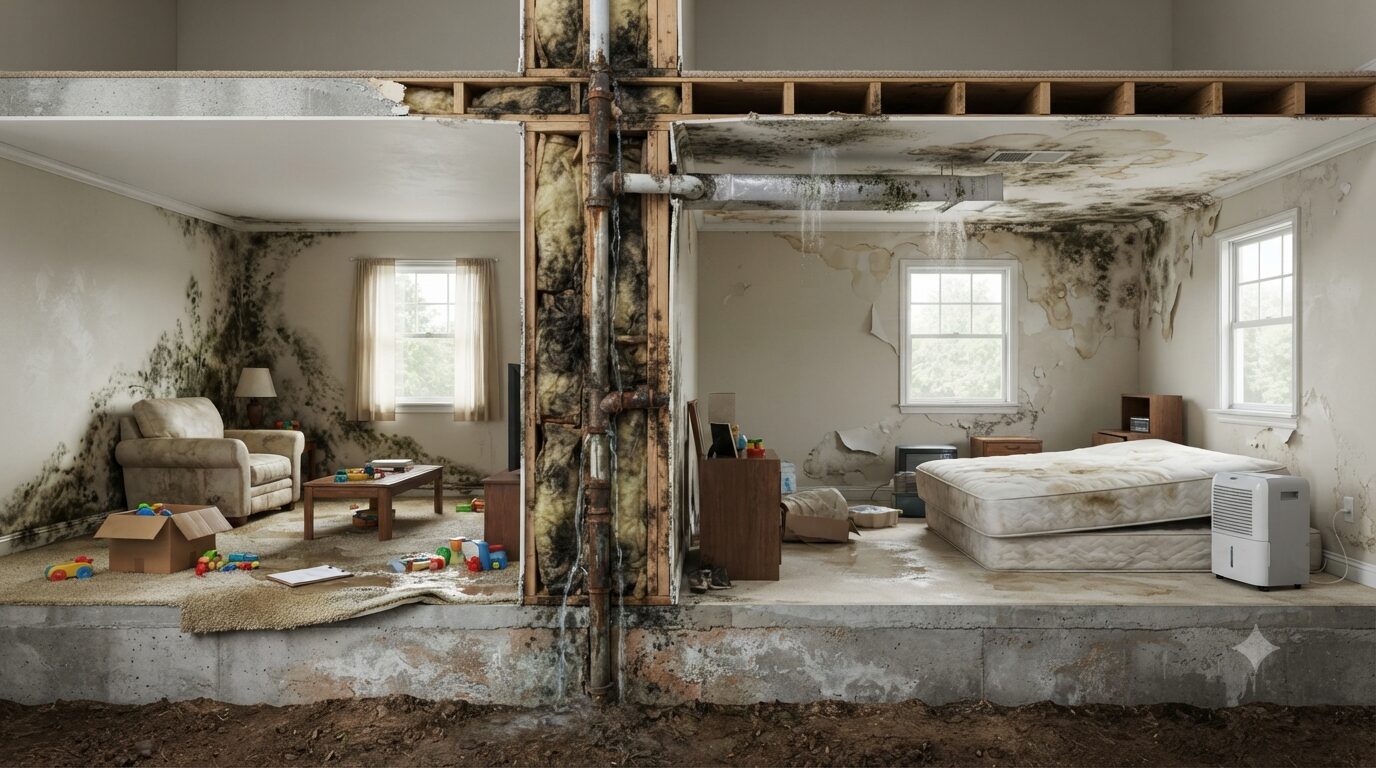
Mold in a multifamily building is never just one unit’s problem. Shared wall assemblies, connected HVAC systems, common plumbing chases, and stacked floor plans mean that moisture and mold contamination in one unit regularly involves adjacent units before anyone is aware of it. For property managers and multifamily owners in the Indianapolis metro, understanding how mold moves through multifamily construction, and what the legal and practical responsibilities are when it appears, is the difference between a contained remediation and a building-wide problem with tenant disputes attached.
The Pathways Mold Uses in Multifamily Construction
A water event in an upper unit travels down through the floor assembly into the ceiling cavity of the unit below. The moisture that saturates the shared assembly is invisible to both tenants: the upper unit sees their own floor damage, the lower unit sees nothing until ceiling staining or odor appears days to weeks later. Mold that establishes in this shared cavity contaminates both units and the assembly between them.
Plumbing chases that run vertically through a building stack carry moisture from a leak at any level to every unit connected to the chase. Shared HVAC systems distribute spores from an affected unit to connected units through return and supply pathways. Restorm Indy’s mold and biohazard assessments for multifamily properties map the full contamination pathway rather than limiting the scope to the unit where the mold was first reported, because the reported unit is frequently not the origin.
The Property Manager’s Response Timeline
When a tenant reports mold or a musty odor, the response clock matters both practically and legally. Indiana landlord-tenant law requires landlords to maintain habitable premises, and mold that affects health or habitability falls within that obligation. A documented, prompt response, assessment scheduled within days, remediation initiated promptly after assessment, protects the property owner. A delayed or dismissive response converts a maintenance issue into a habitability dispute and potentially a constructive eviction claim.
Documentation is the property manager’s protection: the date the report was received, the date assessment occurred, the findings, the remediation scope and dates, and the clearance results. This record demonstrates the owner met the obligation to respond, regardless of how the tenant relationship evolves.
Containment in Occupied Buildings
Remediation in an occupied multifamily building requires containment that protects the tenants who remain in place during the work. Negative pressure containment of the work area, sealed pathways between the work zone and occupied spaces, and HEPA air filtration prevent the remediation itself from distributing spores into occupied units. Restorm Indy performs occupied-building remediation across Indianapolis multifamily properties with containment protocols designed for buildings that cannot be emptied for the work.
Tenant relocation is required only when the contamination or the remediation work directly affects the habitability of a specific unit. Most multifamily remediations displace only the units in the direct work zone, with adjacent units remaining occupied behind containment. The assessment determines which units require temporary relocation, and that determination should be documented alongside the remediation scope.
Who Pays: Owner, Tenant, and Insurance
Responsibility follows cause. Mold from building system failures, roof leaks, plumbing failures in walls, and envelope defects, is the owner’s responsibility, and the owner’s property policy responds subject to its mold provisions. Mold from tenant behavior, sustained failure to ventilate, unreported leaks inside the unit, or moisture-generating activities, may shift some responsibility to the tenant, though the practical burden of remediation still typically starts with the owner.
Commercial property policies handle mold differently than the underlying water damage. Many policies cover mold remediation only when it results from a covered water event and only up to a specified sublimit. Property owners should know their mold sublimit before an event, because a building-wide mold problem can exceed common sublimits quickly.
Prevention at the Building Level
The multifamily buildings that avoid recurring mold problems share operational habits: prompt response to every water event regardless of apparent size, moisture inspections of units during turnover, bathroom and kitchen ventilation verification as part of maintenance, and immediate professional drying for any leak that reached a wall or floor assembly rather than tenant-managed cleanup. Restorm Indy provides emergency restoration services for multifamily properties across the metro with response protocols established per-property in advance, so the first hours of any water event are managed rather than improvised.
Frequently Asked Questions
Q: Is a landlord responsible for mold in an Indiana apartment?
A: Indiana landlords are required to maintain habitable premises, and mold that affects health or habitability falls within that duty when it results from building conditions such as roof leaks, plumbing failures, or envelope defects. Mold caused by tenant behavior may shift responsibility, but the determination depends on documented cause. A prompt, documented response to any mold report is the owner’s best protection regardless of ultimate responsibility.
Q: Can tenants stay in the building during mold remediation?
A: Usually, yes. Professional remediation in occupied multifamily buildings uses negative pressure containment, sealed work zones, and HEPA filtration that isolate the work area from occupied units. Only units in the direct work zone or with habitability-affecting contamination typically require temporary relocation. The assessment identifies which units are affected and documents the basis for any relocation decision.
Q: How does mold spread between apartment units?
A: Through shared floor and wall assemblies where moisture from one unit’s water event saturates the cavity between units, through vertical plumbing chases that carry moisture across levels, and through connected HVAC systems that distribute spores between units. The unit where mold is first visible is frequently not the unit where the moisture originated, which is why multifamily assessment maps the full pathway rather than treating the reporting unit in isolation.
Q: Does commercial property insurance cover mold in a multifamily building?
A: Most commercial property policies cover mold remediation only when it results from a covered water event, and only up to a mold sublimit that is often far below the policy’s general limits. Mold from long-term maintenance conditions is typically excluded. Owners should confirm their specific mold sublimit and the covered-cause requirements before an event, because building-wide contamination can exceed common sublimits.Mold in a multifamily or apartment property in the Indianapolis metro? Restorm Indy provides occupied-building remediation with containment, documentation, and clearance testing. Call now





0 Comments