
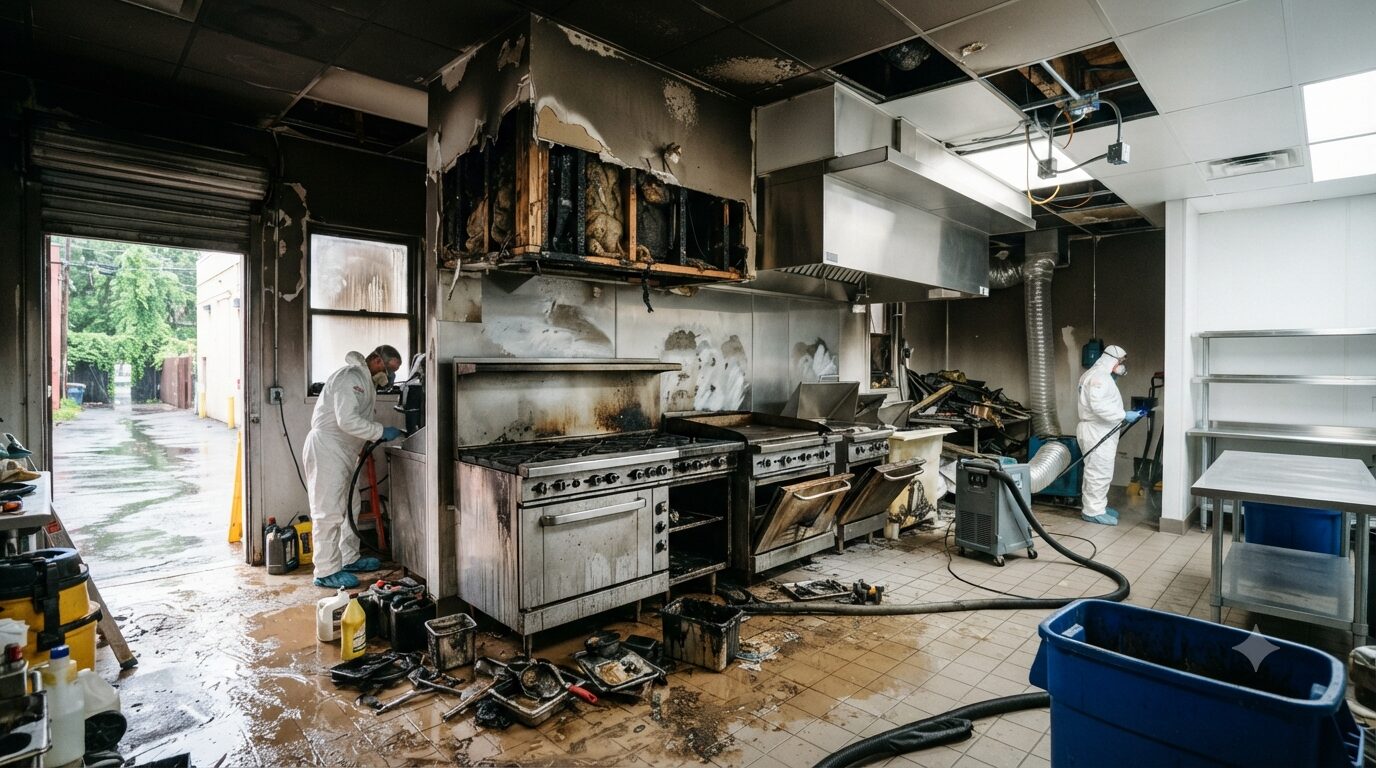
A kitchen fire in a restaurant triggers a recovery process with a hard finish line that residential fires do not have: the health department inspection that must be passed before the doors reopen. Every day between the fire and that passed inspection is a day of lost revenue, idle staff, and customers building habits somewhere else. Understanding what the reopening actually requires, structurally, operationally, and from a regulatory standpoint, lets restaurant owners drive the timeline instead of discovering the requirements one at a time.
Why Kitchen Fire Damage Extends Beyond the Kitchen
Commercial kitchen fires, most commonly grease fires at the cook line, produce smoke that is heavier and more adhesive than typical structural fire smoke. Grease-laden vapor deposits a film on every surface the smoke reaches: dining room walls and ceilings, furnishings, decor, and every piece of equipment in the smoke path. The exhaust hood system that was designed to capture cooking vapor now contains the fire’s residue throughout its ductwork.
The HVAC system distributes the smoke beyond the kitchen into dining areas, restrooms, offices, and storage. Restorm Indy’s fire damage restoration scope for restaurant fires maps the full smoke footprint through the building rather than treating the visible kitchen damage as the extent of the loss, because a reopening that leaves smoke residue in the dining area fails on odor even if it passes on cleanliness.
The Health Department Reality
Marion County and the surrounding county health departments require that a food establishment affected by fire demonstrate the facility is safe and sanitary before reopening. This includes cleaned and sanitized food contact surfaces, functional and cleaned exhaust systems, verified equipment condition, and elimination of smoke residue in food prep and storage areas. The inspection is not a formality. Restaurants that attempt to reopen after owner-managed cleanup regularly fail the inspection on residue in areas the cleanup did not reach, hood systems included.
The documentation that supports the inspection matters as much as the cleaning: what was cleaned, with what agents, at what concentrations, by whom, and when. Professional restoration produces this record as part of the scope. Owner-managed cleanup typically cannot.
Equipment: Restore, Clean, or Replace
Commercial kitchen equipment exposed to fire and smoke falls into categories that determine the path forward. Stainless steel equipment with surface soot but no heat exposure cleans and returns to service. Equipment with electronic controls exposed to smoke requires component-level assessment, because smoke residue on control boards causes failures weeks after the equipment appears to work. Equipment that experienced direct heat, warped panels, damaged insulation, compromised gas connections, is documented for replacement.
Refrigeration presents its own question: units that lost power during and after the fire may have compressor damage from restart conditions, and any food inside is documented for the contents claim and discarded. The equipment assessment should be itemized piece by piece for the insurance claim, because the equipment schedule is often the largest single category in a restaurant fire loss.
Business Interruption and the Reopening Timeline
Business interruption coverage under the restaurant’s commercial policy pays lost revenue during the covered restoration period. The restoration company’s timeline documentation, when work began, what was completed each day, and when the space cleared for the health inspection, establishes that period. Restorm Indy prepares this documentation as standard practice on commercial fire losses, and coordinates the reconstruction schedule around the health inspection requirements so the inspection is scheduled once, passed once, and the reopening date holds.
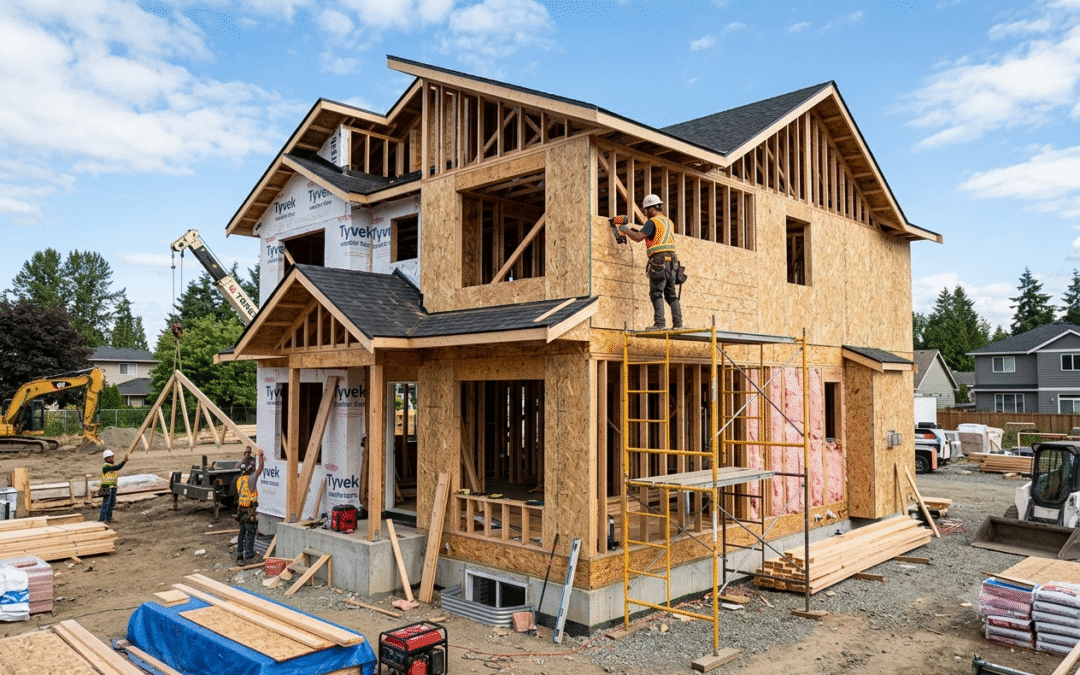
For build-back beyond simple replacement, a fire loss is also the moment many operators reconfigure the line, update finishes, or correct layout problems the original kitchen had. Restorm Indy’s construction and contracting capability allows upgrade work to run inside the same project as the restoration, with the insurance-covered scope and the elective upgrade scope documented separately so the claim stays clean.
The First 48 Hours After a Restaurant Fire
- Secure the property and document everything before any cleanup: wide shots, close-ups, and video of kitchen, dining, and all smoke-affected areas
- Open the insurance claim the same day and notify the health department of the closure
- Shut down HVAC to stop continued smoke distribution through the building
- Inventory food product for the contents claim before disposal
- Get the restoration assessment underway, including hood and duct system, equipment schedule, and full smoke footprint mapping
- Communicate a realistic reopening window to staff once the scope is known, not before
Frequently Asked Questions
Q: How long does a restaurant stay closed after a kitchen fire?
A: A contained cook-line fire with professional restoration typically means two to six weeks from fire to reopening, driven by smoke remediation of the full footprint, hood and duct cleaning, equipment assessment, any reconstruction, and the health inspection. Larger structural losses run months. The timeline is driven less by the visible fire damage than by the smoke footprint and the equipment schedule, which is why early professional scoping produces more accurate reopening dates than visual estimates.
Q: Does the health department have to inspect before a restaurant reopens after a fire?
A: Yes. Food establishments closed by a fire event must demonstrate safe and sanitary conditions before resuming operation, and the health department inspection is the gate. The inspection covers food contact surfaces, exhaust systems, equipment condition, and residue in prep and storage areas. Professional cleaning documentation specifying agents, concentrations, and surfaces treated supports the inspection; undocumented owner cleanup frequently does not.
Q: Can kitchen equipment be saved after a grease fire?
A: Much of it, with assessment. Stainless equipment with surface soot and no heat exposure cleans and returns to service. Equipment with smoke-exposed electronic controls needs component-level evaluation because residue causes delayed failures. Direct heat exposure, warping, damaged insulation, or compromised gas connections means replacement. An itemized piece-by-piece assessment is also what the insurance claim requires, since equipment is often the largest category in the loss.
Q: Does business interruption insurance cover a restaurant closed by fire?
A: Commercial policies with business interruption coverage pay lost revenue during the covered restoration period following a covered fire. The claim requires establishing normal pre-loss revenue and documenting the restoration timeline that defines the covered period. The restoration company’s daily work records and the health inspection clearance date are the primary timeline evidence. Confirm the policy’s waiting period and coverage duration, as both vary.
Restaurant or commercial kitchen fire in the Indianapolis metro? Restorm Indy handles fire restoration, smoke remediation, and reconstruction with health inspection documentation. Call now.




0 Comments