
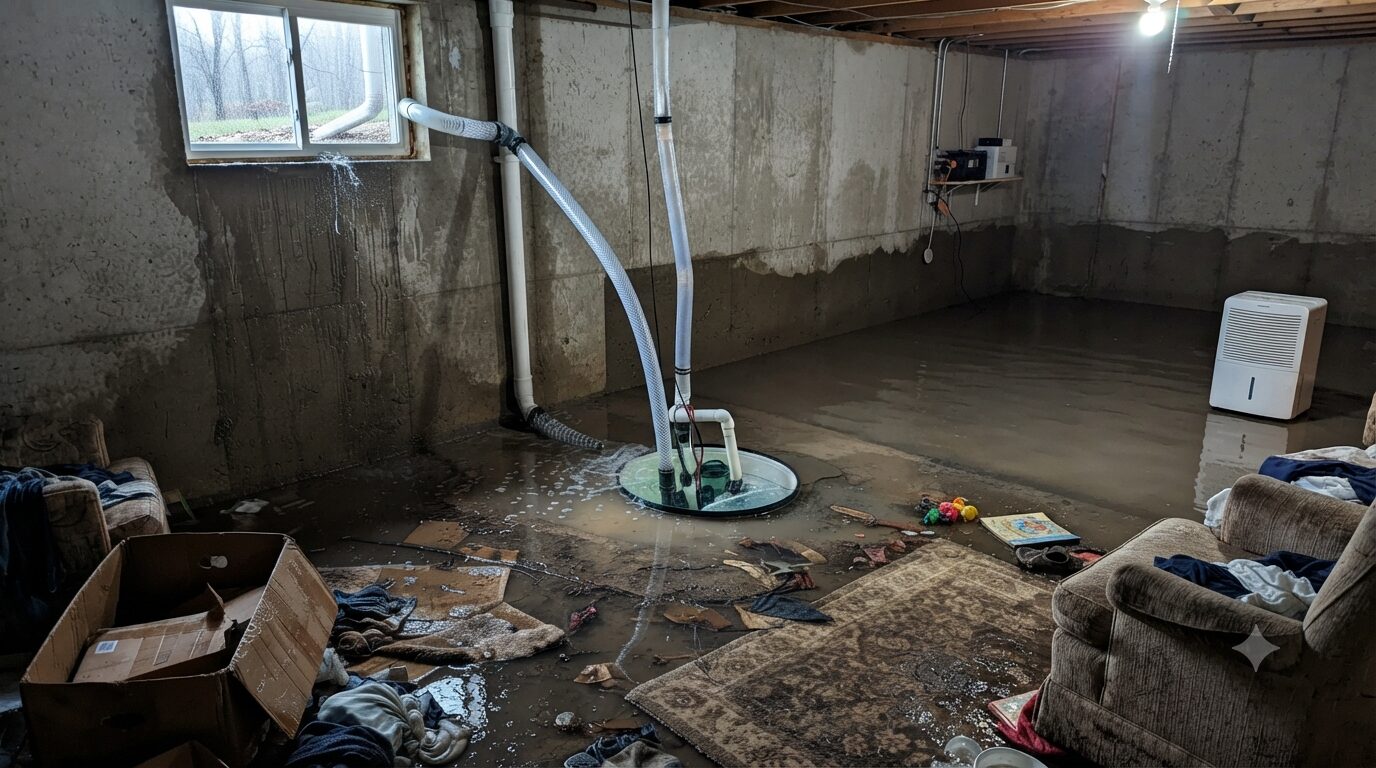
Every spring, as snowmelt combines with the heavy rain systems that track across central Indiana from March through June, basements across the Indianapolis metro flood in a pattern that repeats year after year. The same homes flood repeatedly. The same neighborhoods see clusters of losses after each major rain event. This pattern is not random. It reflects specific characteristics of the region’s soil, drainage infrastructure, and housing stock that determine which basements flood and which stay dry. Understanding the mechanics gives homeowners the information to break the cycle rather than just cleaning up after each event.
The Soil and Water Table Reality in Central Indiana
Much of the Indianapolis metro sits on glacial till soils with significant clay content that drains slowly. During extended spring rain periods, the soil around home foundations saturates and stays saturated for days to weeks. This saturated soil creates hydrostatic pressure against basement walls and floors, pushing water through any available path: wall cracks, the joint where the wall meets the floor slab, and utility penetrations.
The regional water table also rises during the spring wet season. Basements that sit near the seasonal high water table experience groundwater infiltration during the spring months that does not occur during the rest of the year, which is why some homes flood only in spring despite having no visible defect the rest of the year. Restorm Indy’s water damage restoration teams respond to this seasonal pattern across the metro every spring, and the assessment always includes identifying which entry mechanism produced the specific loss, because the fix depends on the mechanism.
The Sump Pump Capacity Question
A sump pump system that keeps a basement dry during normal conditions can be overwhelmed during a major spring rain event when groundwater inflow exceeds the pump’s discharge capacity. Extended rain events also produce the power outages that disable primary pumps at exactly the moment demand peaks. The homes that flood repeatedly in spring often have sump systems that are undersized for their actual peak inflow, not failed systems.
After a flooding event, the restoration assessment should include an evaluation of the demonstrated inflow rate against the installed pump capacity. A basement that took on water while the pump ran continuously needs more capacity, a battery backup, or both. Restoring the finished basement without addressing the capacity gap schedules the next loss for the next major rain event.
What Restoration Involves for a Flooded Indiana Basement
Emergency extraction removes the standing water on day one. Moisture mapping with thermal imaging identifies how far the water migrated into wall assemblies, under flooring, and into framing. Saturated drywall and insulation in finished basements is removed to the height of the moisture line plus a margin. Industrial drying runs three to five days with daily readings. Reconstruction follows moisture clearance and rebuilds the removed finishes.
The mold timeline matters in every basement loss: 24 to 48 hours from saturation to the beginning of mold establishment in wet organic materials. Basements that flooded during the night or while owners were away frequently cross this threshold before extraction begins. Restorm Indy integrates mold and biohazard assessment into basement flood response when the response timing or water volume indicates elevated risk, so mold that has begun establishing is addressed within the same project rather than discovered weeks later.
Sewer Backup: The Other Spring Flooding Source
Some central Indiana communities have combined or aging sewer infrastructure that surcharges during major rain events, pushing sewage back into basements through floor drains. This is category three contamination requiring professional remediation, protective equipment, removal of all porous materials the water contacted, and disinfection of surfaces. It is a categorically different event from groundwater flooding even when the water volume looks similar.
Coverage also differs. Groundwater flooding requires flood insurance or specific endorsements. Sewer backup requires a sewer backup endorsement that is not part of standard homeowner policies. Homeowners in neighborhoods with backup history should confirm both endorsements exist on their current policy before the next spring season.
Breaking the Annual Cycle
- Grade soil around the foundation to slope away from the structure, correcting settling that directs roof runoff toward the walls
- Extend downspouts at least six feet from the foundation, moving roof water beyond the backfill zone
- Upsize the sump pump if the demonstrated inflow during the last event approached or exceeded capacity
- Add a battery backup pump for outage protection during storm events
- Install a backwater valve if the neighborhood has any sewer backup history
- Seal wall cracks and the cove joint with appropriate interior or exterior drainage solutions where hydrostatic entry was identified
Frequently Asked Questions
Q: Why does my basement only flood in the spring?
A: Spring flooding that does not occur the rest of the year typically reflects the seasonal rise of the regional water table combined with soil saturation from snowmelt and extended rain. Basements near the seasonal high water table experience hydrostatic pressure and groundwater infiltration only during these months. The entry paths, wall cracks, the floor-wall joint, and utility penetrations, are present year-round but only pass water when the surrounding soil is saturated.
Q: Is spring basement flooding covered by homeowners insurance in Indiana?
A: Coverage depends on the water source. Groundwater and surface water entering the basement requires flood insurance, which is separate from the homeowner policy. Sump pump failure is covered only if the policy has a sump pump or water backup endorsement. Sewer backup requires its own endorsement. Standard homeowner policies without these endorsements typically exclude all three spring flooding mechanisms. Review the declarations page before the wet season, not after the loss.
Q: Can a finished basement be saved after spring flooding?
A: The structure can be restored in nearly all cases. Whether specific finishes can be saved depends on the water category and response time. Clean groundwater addressed within 24 hours allows more material salvage than water that stood for days. Drywall and insulation that absorbed water are removed and replaced as standard practice. Flooring outcomes vary by material: carpet is usually replaced, luxury vinyl often survives, and hardwood depends on exposure duration.
Q: How fast should extraction start after a basement floods?
A: Same day, ideally within hours. Mold begins establishing in wet organic materials within 24 to 48 hours, and every hour of standing water extends moisture migration deeper into wall assemblies and framing. A basement discovered flooded in the morning should have professional extraction underway that day. Waiting through a weekend regularly converts a drying project into a drying plus mold remediation project.
Basement flooding in Indianapolis, Avon, Carmel, Fishers, Zionsville, Whitestown, or Lebanon? Restorm Indy provides same-day emergency extraction and full basement restoration. Call now.






0 Comments